

In today’s ESG landscape, the conversation is shifting—from compliance-driven reporting to value-driven strategy. Organizations are no longer judged only by what they disclose, but by what truly matters.
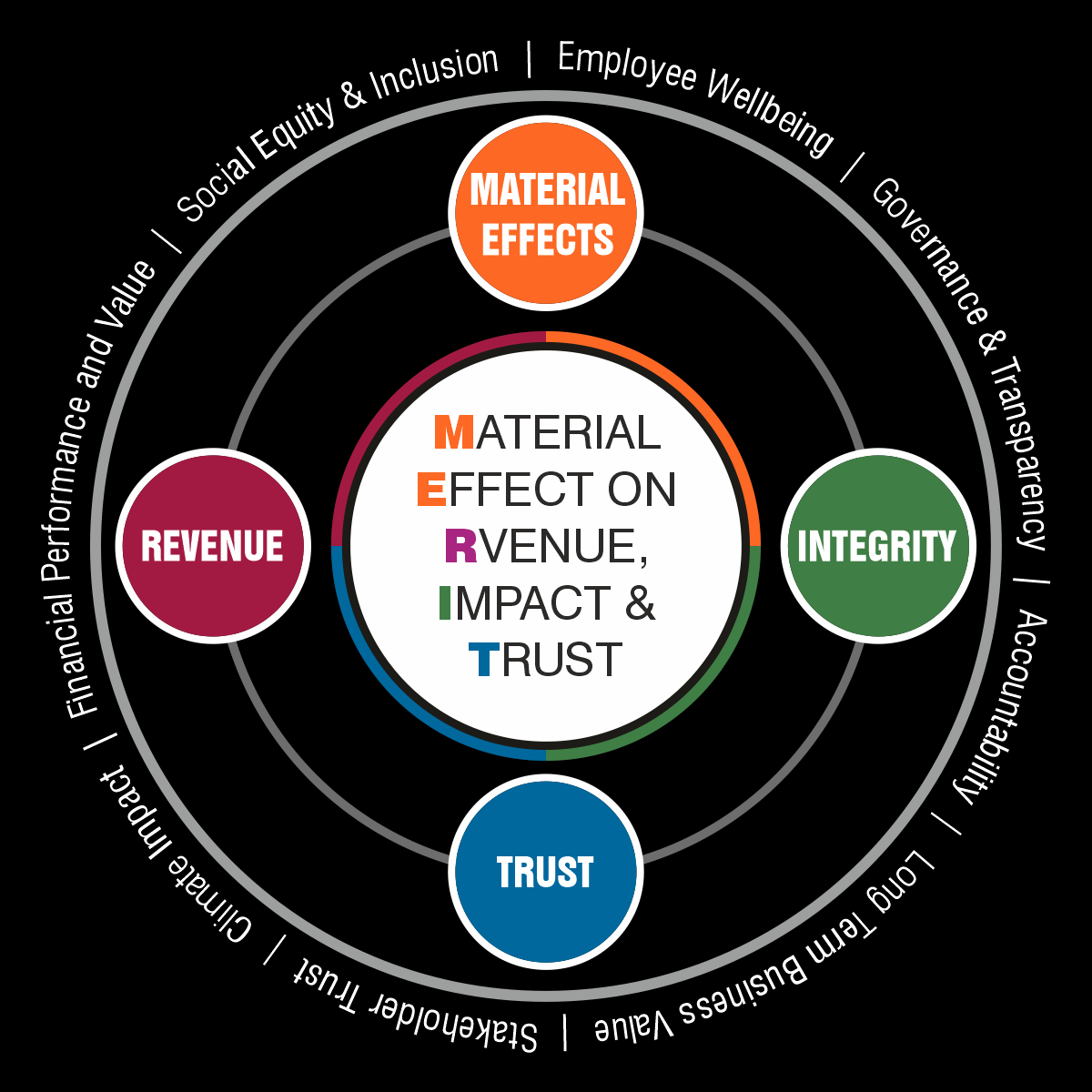
At the center of this shift is a powerful lens MERIT — Material Effects on Revenue, Impact and Trust
This brings clarity to ESG by linking sustainability efforts directly to business performance and stakeholder expectations.
What Makes ESG “Material”?
Materiality in ESG refers to issues that significantly influence decision-making, whether by investors, customers, regulators, or employees.
A material ESG factor is one that:
- Shapes stakeholder perception and trust
- Creates measurable environmental or social impact
- Influences financial performance and long-term value.
In simple terms, materiality is where purpose meets profitability.
Decoding MERIT
M – Material
Not all ESG topics are equal. Material issues are those that are relevant, significant, and decision-critical.
Identifying materiality requires:
- Stakeholder engagement
- Risk and opportunity assessment
- Alignment with industry standards
Without materiality, ESG becomes noise. With it, ESG becomes strategy.
E - Effects on Environment & Society
It reflects how an organization interacts with the world around it.
Key areas include:
- Climate action and emissions reduction
- Resource efficiency and circular practices
- Social equity, inclusion, and community development
These are not just ethical considerations—they are drivers of resilience and innovation.
R – Revenue
ESG is increasingly tied to financial outcomes. Organizations that integrate sustainability effectively see tangible business benefits:
- Reduced operational costs through efficiency.
- New revenue streams via sustainable products.
- Better access to capital and investor confidence.
ESG, when done right, is not an expense—it is a value creator.
I - Impact Integration
The real strength of MERIT lies in integration—connecting impact with business strategy.
For example,- Sustainable sourcing improves environmental outcomes while strengthening supply chains.
- Employee wellbeing enhances productivity and brand reputation.
- Governance transparency builds investor trust.
Impact Integration ensures ESG is embedded into decision-making, not treated as a parallel function.
T - Trust (Stakeholders)
Trust is the ultimate outcome of effective ESG.
Stakeholders today expect:
- Transparency in disclosures
- Authenticity in commitments
- Accountability in performance
Organizations that build trust create enduring brand value—a critical differentiator in competitive markets.
From Reporting to Strategy
Traditional ESG reporting often focuses on compliance. However, leading organizations are moving towards strategic ESG, where:
- Materiality drives priorities
- Data informs decisions
- Communication builds credibility
Frameworks like GRI, BRSR, SASB, and TCFD support this transition, but the real differentiator is how clearly a company connects ESG to its core business.
Communicating MERIT Effectively
Even the strongest ESG strategy can fall flat without effective communication.
A compelling ESG narrative should:
- Highlight material issues clearly
- Demonstrate positive impact effectively
- Build trust through transparency and design clarity
This is where structured storytelling and thoughtful design transform reports into engaging, decision-useful documents.